
Big Feelings, Little Bodies: Teaching Toddlers to Name Emotions
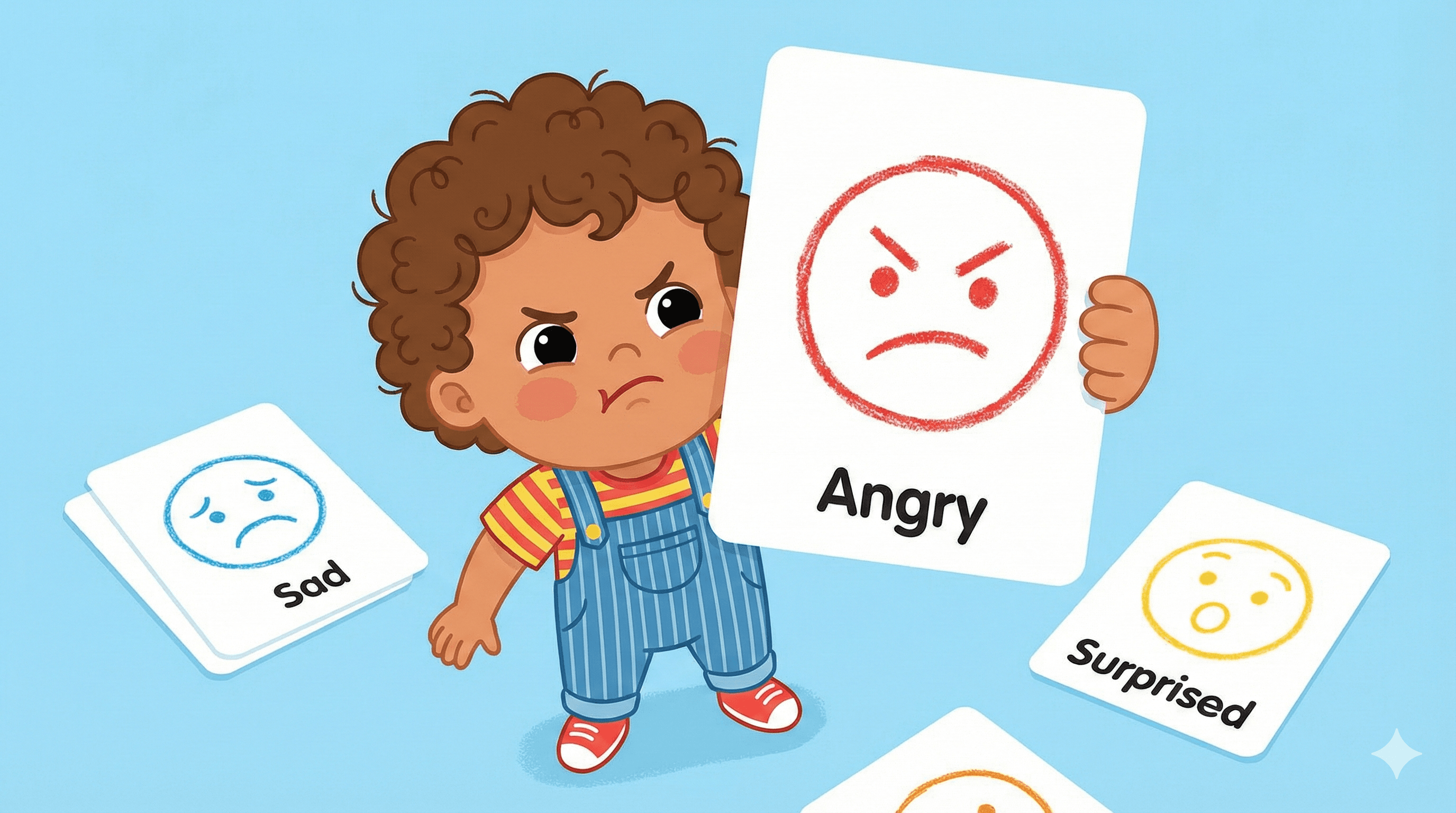
"Use your words."
We say this to our toddlers all the time in San Jose. But do they actually have the words?
Often, a toddler screams not because they are "bad," but because they are frustrated. They feel a storm inside—anger, sadness, jealousy—but they only have one output: crying.
At Sunny Child Care, we believe that Emotional Intelligence (EQ) starts with vocabulary. If you can name it, you can tame it. Here are three ways to help your child build their emotional dictionary.
1. Be the Sportscaster
Narrate their feelings for them, especially when they are calm.
- The Scenario: They are trying to stack blocks, but the tower falls. They frown.
- The Strategy: Say, "Oh, that looks frustrating. You worked hard, and it fell down. You feel frustrated."
- Why: You are connecting the physical sensation (tight chest, frown) with the label ("frustrated").
2. The Mirror Game
Toddlers love looking at themselves. Use this to teach facial expressions.
- The Activity: Stand in front of a mirror together.
- The Prompt: "Show me a Happy face!" (Smile big). "Show me a Sad face." (Pout). "Show me a Mad face!" (Scrunched eyebrows).
- Bilingual Bonus: Do it in Chinese too! "做一個生氣的臉 (Make an angry face)!"
- Why: It makes emotions concrete and visible.
3. Read Books About Feelings
Storytime is the safest place to explore big emotions because they are happening to someone else (a bear, a bunny, or a truck).
- The Strategy: While reading, pause and ask, "Look at the bear. He is crying. How do you think he feels?"
- Recommendation: The Color Monster (顏色妖怪) is a fantastic bilingual-friendly book for this.
Validate, Don't Fix
When your child is upset, your instinct is to stop the crying. "Don't cry, have a cookie." Try to pause. Say, "I see you are sad. It's okay to be sad." Once they feel heard, the tears usually stop faster than if you try to suppress them.
Building this vocabulary takes time, but it pays off. One day, instead of throwing a toy, they will look at you and say, "I am mad!" And that, parents, is a huge victory.
More to Read
2025 Guide to Easter Egg Hunts & Spring Events in North San Jose | 聖荷西當地復活節尋蛋活動指南
From Berryessa Community Center to Emma Prusch Farm, discover the best toddler-friendly spring events and Easter egg hunts in North San Jose for 2025. | 從 Berryessa 社區中心到 Emma Prusch 農場,探索 2025 年北聖荷西最適合幼兒的春季活動和復活節尋蛋趣處。
Picnic Perfect: Best Toddler-Friendly Parks in North San Jose for Spring
Sun's out! Director Jessie lists the top 3 parks in 95131/95132 with clean grass, shade, and toddler-safe playgrounds. Plus, easy picnic finger foods to pack.

Egg-cellent Fun: 3 Easy Easter Crafts for San Jose Toddlers
Easter is coming to San Jose! Director Jessie shares 3 simple, low-prep crafts using supplies from the Berryessa Dollar Tree. Perfect for busy parents and active toddlers.